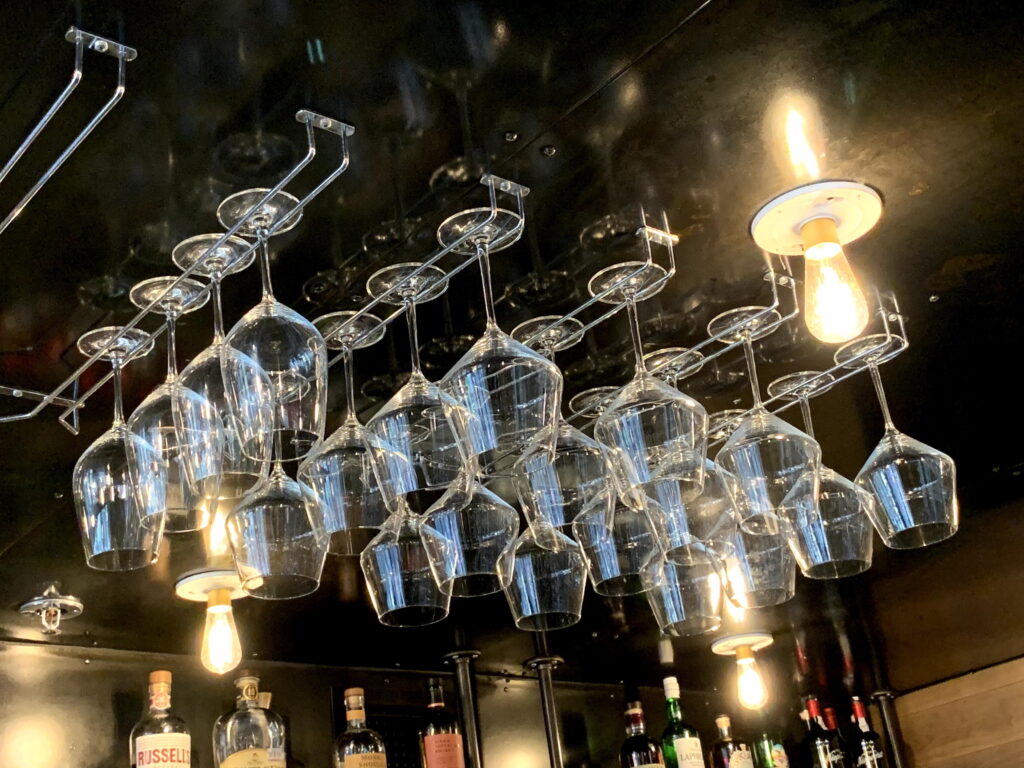
Here are 20 glasses with all the nice reflections and patterns and composition. While it reminds me of a great night during a brief getaway trip, I’ve taken similar photos at a lot of bars, and while this I think this the nicest among them, it’s one of those moments we don’t really notice until we do. This isn’t much more than that. It’s a good composition, nicely lit.
January 18, 2020. IPhone XS Max cell phone, 4.25mm focal length (35mm equivalent: 48mm), f/1.7, 1/60, ISO 320.
In some of the dragonfly photos I’ve posted, I’ve mentioned that they are territorial and will claim a nebulous little bit of airspace and chase away all the other dragonflies that approach or pass through it.
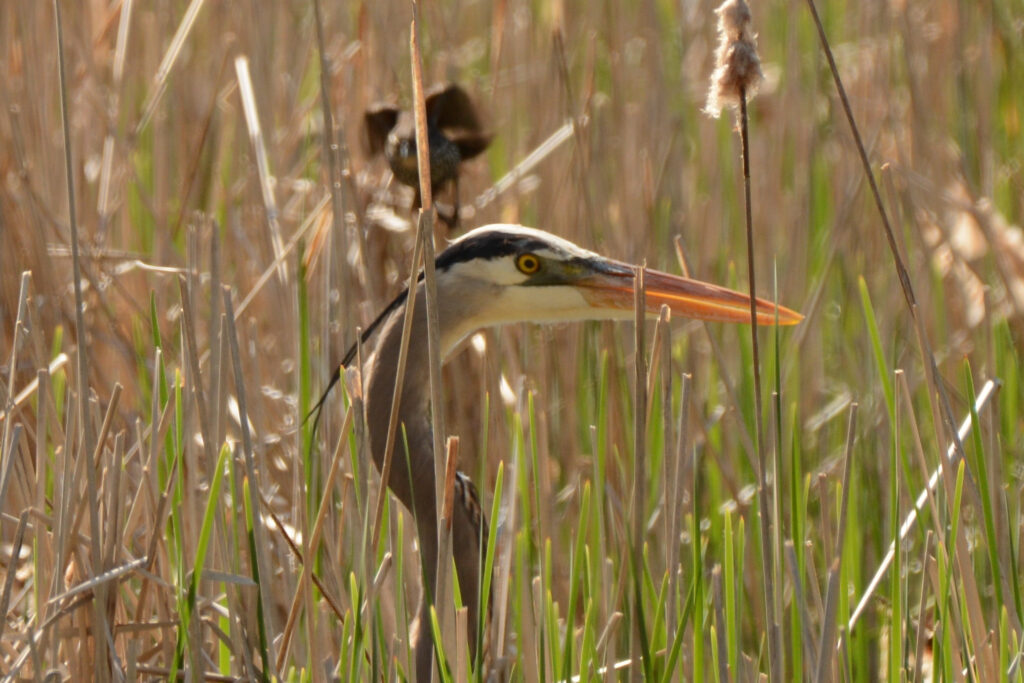
Many birds are too, and not all of them are chased away so easily. This great blue heron wandered into a red-winged blackbird’s nesting area, which pissed off that red-winged blackbird a whole lot. He started squawking, then flapped his wings, then jumped up off his reed and squawked a bit, progressing from all the shades of Code Yellow to Code Orange to Code Red.
The heron did not care. It just stood there looking blankly around, which is pretty much the job description of a heron, and it is committed to that role.
Finally, the red-winged blackbird flew over to the heron. It flew behind and squawked. It flew in front and it squawked. And, finally, it just started attacking the heron with its claws.
The heron did not care. It just stood there looking blankly around etc. etc. etc.
I so wish that reed was not there. I was clicking away knowing the blackbird was coming from a different angle each time, not knowing where to stand to get the best angle. Nonetheless, and even with the blur of the speeding blackbird, it’s a recognizable photo of a red-winged blackbird attacking an utterly uncaring great blue heron under circumstances I couldn’t predict, and that’s why I love this photo.
I have captured similar photos with red-winged blackbirds and other birds that will show up here eventually. Tension between animals acting on instinct is a fun subject to work with.
May 4, 2019. Cropped from a larger image. Nikon D7100 (DX sensor), Tamron 100–400mm lens at 340mm (35mm equivalent: 510mm), f/6.7, 1/350, ISO 280.
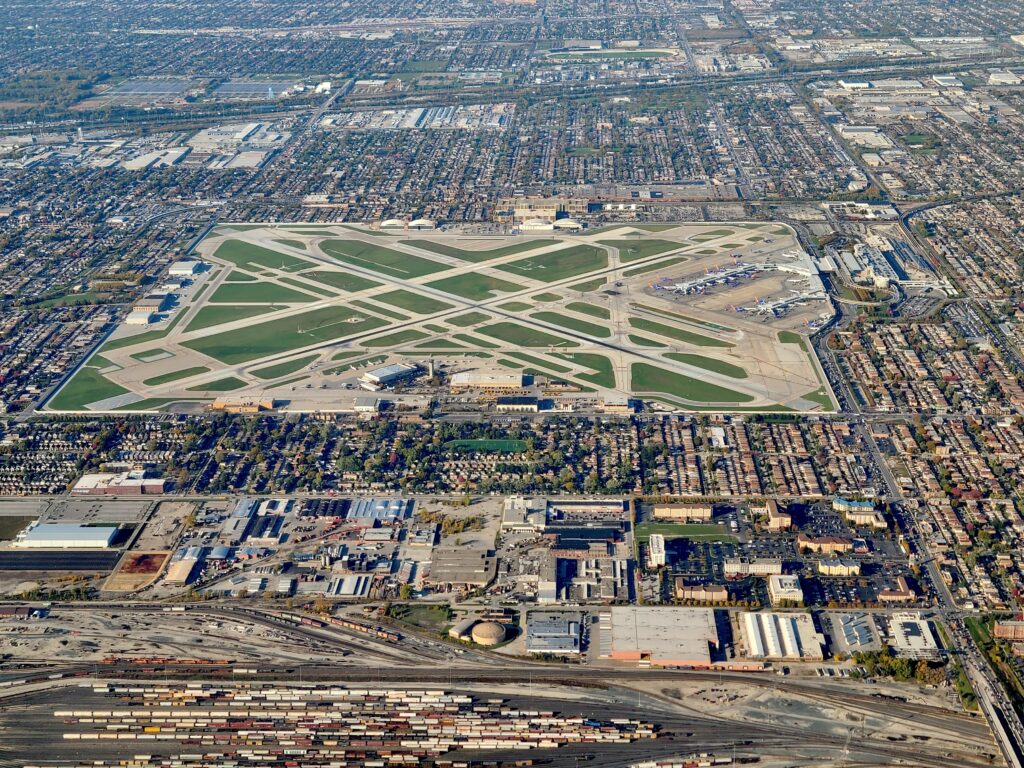
There aren’t a lot of ways to get a picture of the entirety of O’Hare Airport. You’re flying away from it or into it and even if the flight plan includes some sharp banking, it’s a substantial piece of land.
Its little cousin, Midway Airport, isn’t quite as busy as O’Hare, and the fact that it’s barely a mile to the side is a big reason for that. But it has a lot of commercial flights to a lot of destinations, and I’ve used it for my own vacations, as have friends who came to town to visit me. It tends to be a little more regional, for sure.
Returning to Chicago, my plane flew past Midway as it settled into its approach for its runway. It was a rare perfectly clear day, and as we flew past, I captured a few photos, knowing one would be the winner, and that is why I love this photo.
October 23, 2023. Samsung S24+ cell phone, 5.9mm focal length (35mm equivalent: 28mm), f/2, 1/300, ISO 25.
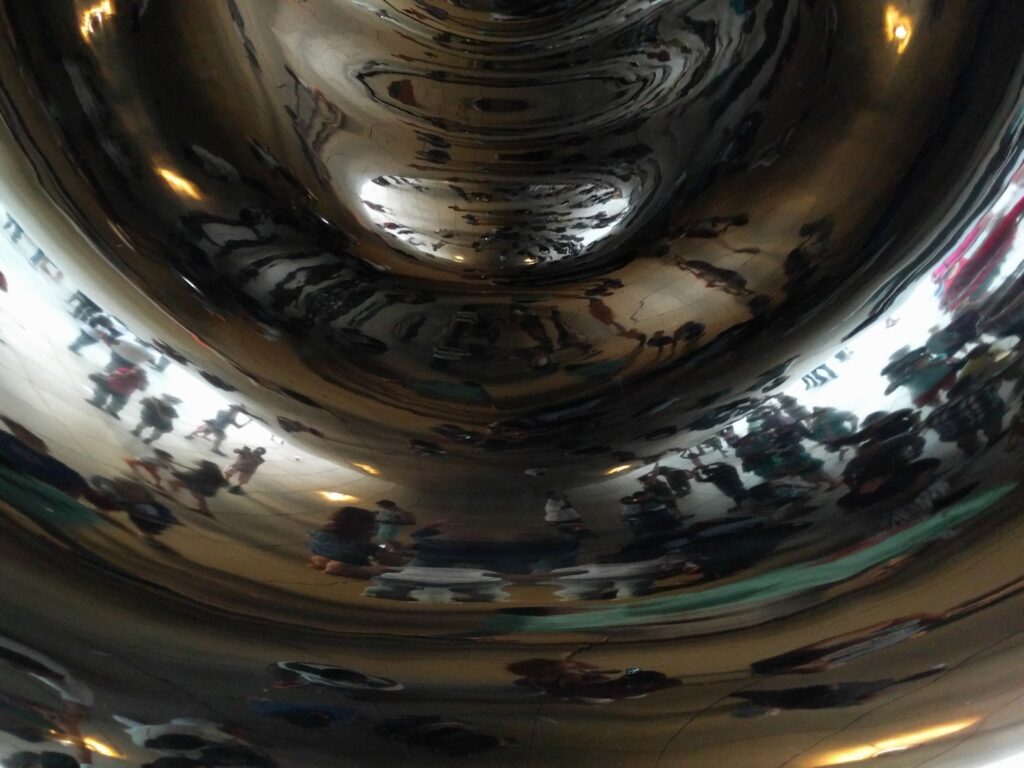
Back when my parents started bringing us kids to neighborhood carnivals, funhouses were one of my favorite attractions at them, and if those had either funhouse mirrors or halls of mirrors, I was the happiest guy on earth. I think it was the first seed put into my mind that light and form were things people could play with.
Here’s another shot of the famous Chicago landmark the Bean, actually titled Cloud Gate. The outside of the sculpture is a nice, pleasant experience that plays a little with your mind. Maybe you’re closer than you think; maybe you’re farther away. The skyline looks great from most angles, especially if there’s a blue sky.
But get underneath it and you get the full funhouse mirror effect. It’s interesting to watch people. The appeal of the Bean is finding yourself, and it’s really hard to do that underneath. I think I know which of these reflections is me.
But I think it’s the most rewarding view the Bean can give people, and because it plays with both light and people’s minds so much, it’s both a concept and a photo I love.
September 4, 2016. Google Nexus 6P cell phone, focal length 4.67 (35mm equivalent: 26mm), f/2, 1/20, ISO 400.
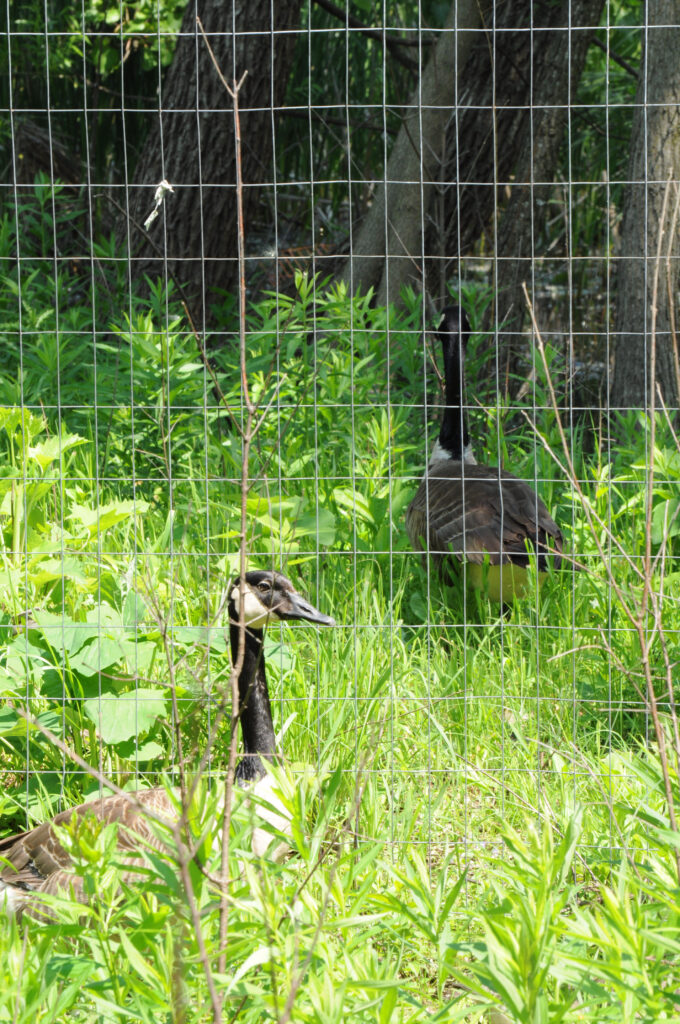
If they were people, it would be obvious, but it still works. The gander behind the fence looks like he’s behind bars for some reason, can’t even face his visiting buddy, who has a stoic expression as he considers the situation. As soon as I saw the two of them on opposite sides of the fence, the one in back facing away, I had that story in mind.
May 22, 2011. Nikon D90 (DX sensor), 70–300mm Nikon zoom lens at 140mm (35mm equivalent: 210mm), f/20, 1/50, ISO 400.
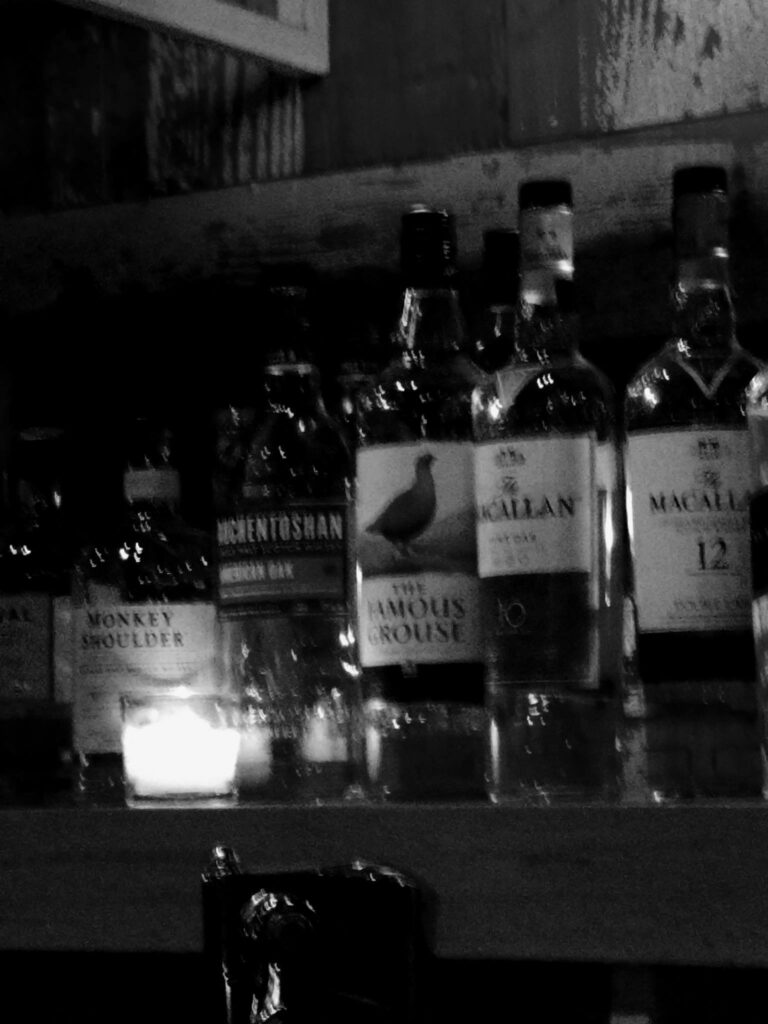
Here’s a nice, moody shot from a bar I used to live near. The bar itself wasn’t the least bit dark or moody most of the time — it was a barbecue joint and they liked it loud and active. But sometimes you’d go in and it would be mellower. I guess that’s why it isn’t around anymore. I like taking photos in and around bars, and this is one of my favorites.
I don’t have any of the exposure information for this, and the best I can do on the date is early 2018.
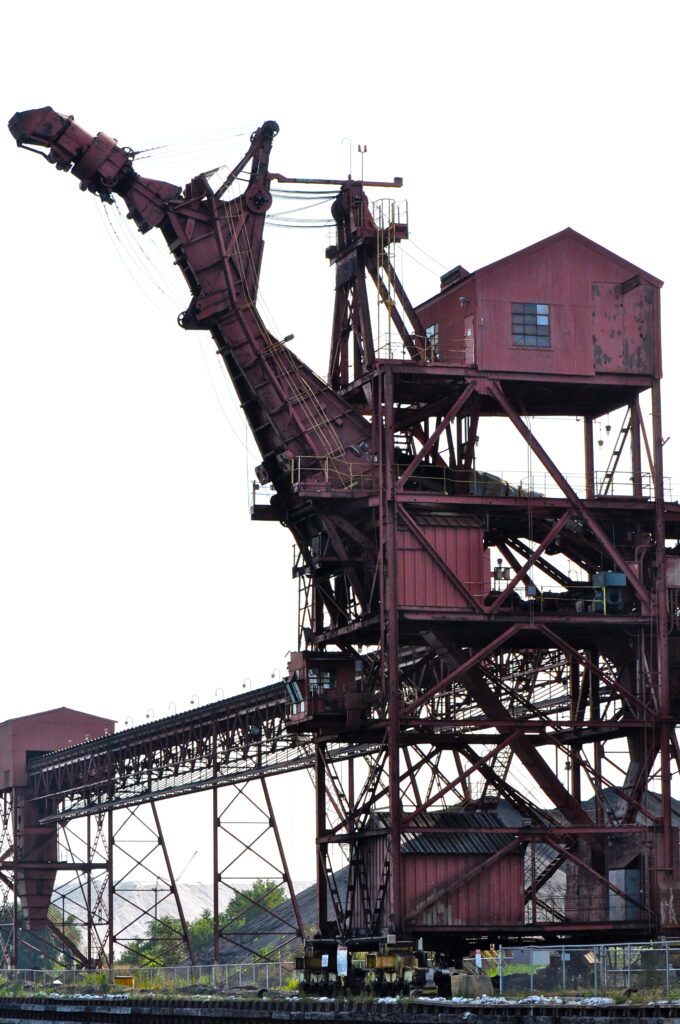
The boat trips along the industrial Calumet River went past a lot of things that, to return to a phrase I use a lot, If You Knew, You Knew. This is one of them. And I do not know. I have a vague idea, which is that it either loads or unloads… something. I guess you can’t load without also unloading, so there’s that. Just the fact that there are… four? cabins says this isn’t easy to use. Along with its whole design. The far end, at the lower left here, has a pretty narrow hopper, so that must be used to fill trucks, or railroad cars. And the big end way up there must somehow be able to reach down to stuff that’s on the freight boats coming along the river.
I have no idea.
August 29, 2010. Nikon D90 (DX sensor), 70–300mm Nikon zoom lens at 70mm (35mm equivalent: 105mm), f/10, 1/1,250, ISO 640.
I’ve talked a couple of times (more will come, let’s face it) about the joys of timing a flight to arrive somewhere at the right time to get pretty pictures. But (let’s face it again) sometimes the right move is to end up where you’re going in time for the skyline to catch some color. I am old enough to remember when no Austinite could ever think there’d be this many glass towers in the city. There are still a lot of natives (and frequent visitors) who miss those old days. But I have to admit, sometimes there’s a postcard waiting for you and I’m not going to be the nostalgic snob who whines, “Those buildings shouldn’t even be there.”
January 30, 2025. OnePlus 12 cell phone, 13.3mm focal length with digital zoom (35mm equivalent: 140mm), f/2.6, 1/40, ISO 250.
Actually, they’re buttonbushes, and they’re a lot of fun to photograph for a few reasons. As flowers go, they’re an unusual and interesting shape, and they grow in groups, so you can play with composition as I did here. They’re marvelous subjects for macro photography, as will come up here at some point, and pollinators love them. Buttonbushes do not exist for long in Chicago; we see them for a very brief time. But in that short time, they attract butterflies, bees, and hornets, all of which are much too busy gathering all that pollen to bother with the photographer.
July 14, 2013. Nikon D7100 (DX sensor), Nikon 70–300mm lens at 300mm (35mm equivalent: 450mm), f/16, 1/250, ISO 400.
It is also safe to say that most Chicagoans, in the heat of mid-August, are ready to climb out onto a log, stare off into space, and wonder what the point of it all is.
August 25, 2012. Nikon D90 (DX sensor), 70–300mm Nikon zoom lens at 195mm (105mm equivalent: 290mm), f/16, 1/125, ISO 500.
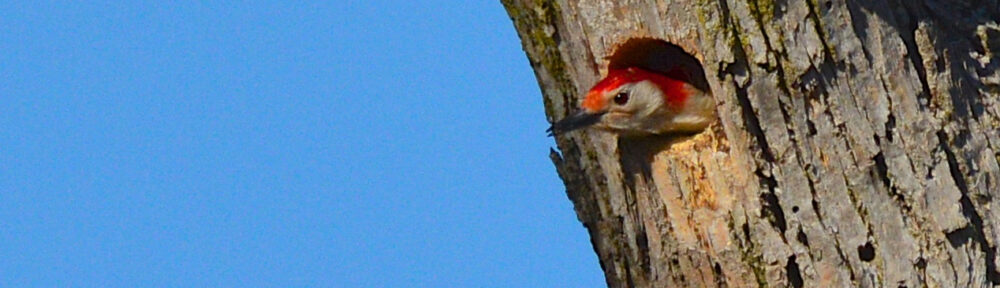
It is safe to say that most Chicagoans, sometime around mid-March, are ready to climb out onto a branch, stare off into space, and wonder what the point of it all is.
March 17, 2019. Nikon D7100 (DX sensor), Tamron 100–400mm lens at 165mm (35mm equivalent: 250mm), f/5.6, 1/250, ISO .280
One of the attributes of humanity is that we are the only creature aware that we live life in two dimensions. We can observe and think about all the creatures that swim, all the creatures that fly, and know that they not only live life in three dimensions but have senses we don’t have so they can cope with that.
Dragonflies, I’ve mentioned before, are territorial, and occasionally hover in place to stake out a… hmm, a piece of air, I guess. Well, a volume of space: They want other dragonflies to know what area they’re protecting. If you get to know a dragonfly or two, you can start to predict where in three-dimensional space they will routinely stop, and, with that in mind, you can set up your exposure settings to get, with plenty of patience, a pretty good shot of a dragonfly nearly frozen in that spot when they return. A shutter speed of 1/1,500th of a second still wasn’t quite fast enough to freeze those wings. And there’s no need to think about how many failed shots I had to take to get this keeper. I will take the victory lap on this shot.
July 23, 2016. Cropped from a larger image. Nikon D7100 (DX sensor), Nikon 70–300mm lens at 300mm (35mm equivalent: 450mm), f/8, 1/1,500, ISO 1,600.
We’re back in the 2009-era Meatpacking District and, for all the questionable detail around the fire escape and the building it’s arguably attached to, what caught my eye was that porthole. For instance: Why? What? What happens if you dive in? Or… does anything or anyone ever come out? If there’s a fire, would it be faster (or safer!) to get out through that porthole?
As with many of the pictures of that area from that walk, interesting things turned up that just ended up being unanswerable, and they’re long gone.
September 5, 2009. Nikon D90 (DX sensor), Nikon DX 18–105mm lens at 40 mm (35mm equivalent: 60 mm), f/13, 1/124, ISO 1,250.
Mostly when I’m photographing insects, the rule is to try to make sure the eyes are nice and sharp and there’s enough going on in the rest of the photo to be interesting. So if a monarch butterfly slurping up some nectar, sure, that’s really about all you need and about all you’re going to get. But look at those beautiful wings. The texture and the folds really show up nicely here. This was a significantly larger image and a pretty standard one of yet another monarch butterfly getting some chow. But when I zoomed in on my laptop screen, all this detail came to life, and I knew it had to have its day here. It’s easy to capture this kind of detail on dragonflies, as we’ve seen already. Monarchs, butterflies in general, you need just the right light at just the right angle, and you have to look past the full picture to realize cropping is the best thing you can do. That’s why I love this photo.
July 29, 2023. Cropped from a larger image. Nikon D850 (FX sensor), Tamron 100–400mm at 400mm, f/6.3, 1/2,000, ISO 400.
“Hi, I’m Troy McClure, and no, that isn’t a typo in the title! That duck on the right has her left eye open and is watching her mate! We’ll never know if he’s peeking back, but wouldn’t that be cute?”
The sun isn’t making a cold day much warmer in mid-November, and if you’re a critter out in the wild — even in the “wild” and yes, those are finger quotes here in Chicago — on a day like that, if you aren’t eating or taking care of the kids, you may as well hunker down and stay warm as best you can. Ducks are among the many birds that bond for life and this is a cute moment for these two. They may or may not agree, of course.
November 13, 2022. Nikon D850 (FX sensor), Tamron 100–400mm at 400mm, f/8, 1/45, ISO 200.