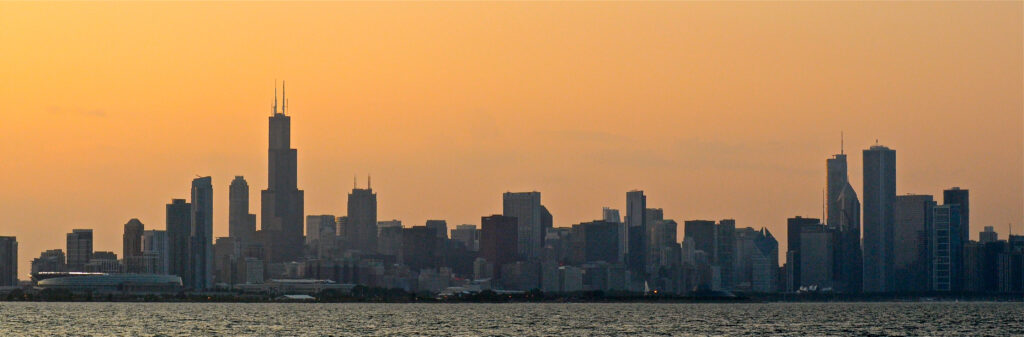
Here’s a nice complement to yesterday’s photo, and once again, the larger you can view this, the better. I’m really happy with how this skyline shot — taken as one of the Forgotten Chicago tours returned to the harbor — came out, especially because it was hot and muggy, so I was shooting through high humidity, and the sun was well into the west, so not a bit of sunlight was hitting this scene. It was a tricky photographic situation and I took a bunch of photos at different settings figuring one would come out. I was still pretty new to DSLR photography when I took this first trip, as I’ve mentioned before, and getting a good shot of the skyline under these conditions taught me a bit about exposure.
August 29, 2010. Nikon D90 (DX sensor), 70–300mm Nikon zoom lens at 70mm (105mm equivalent: 210mm), f/7.1, 1/4,000, ISO 640.
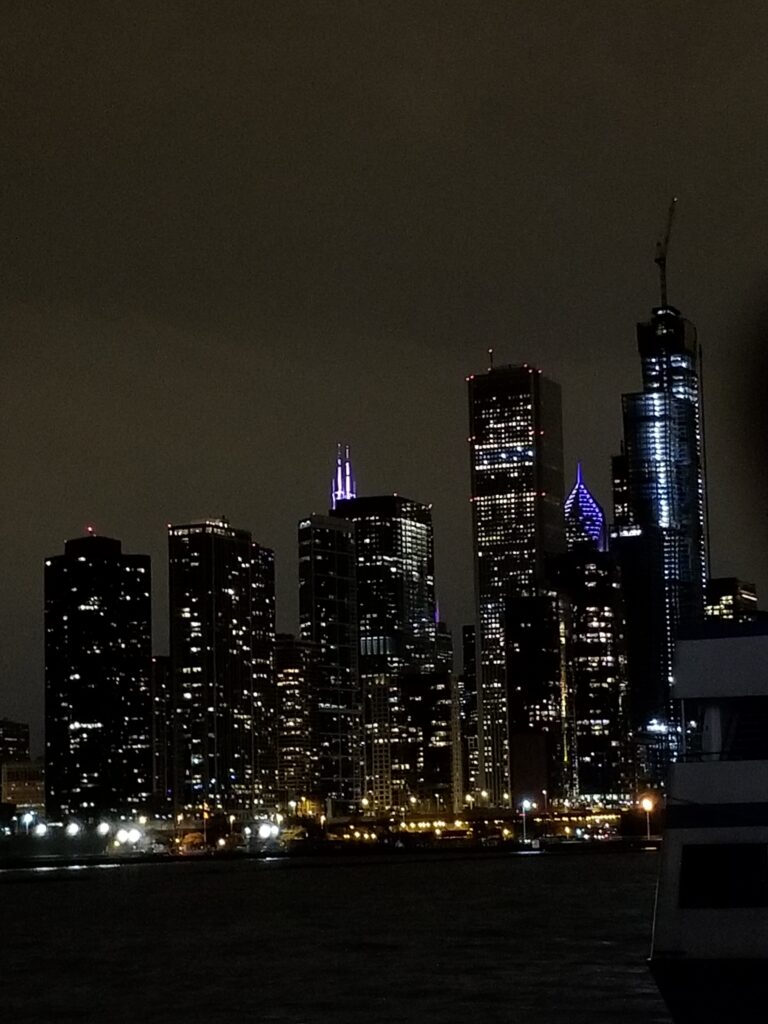
Whatever my take on Chicago, I will always agree that it glitters nicely at night. This is the New Eastside [sic] to South Loop skyline and it’s got a good look. As I move forward with relocation plans, I’m glad to see photos like this in my collection.
November 3, 2018. Samsung Galaxy S8+ cell phone, focal length 4.25mm (35mm equivalent: 26mm), f/1.7, 1/13, ISO 200.
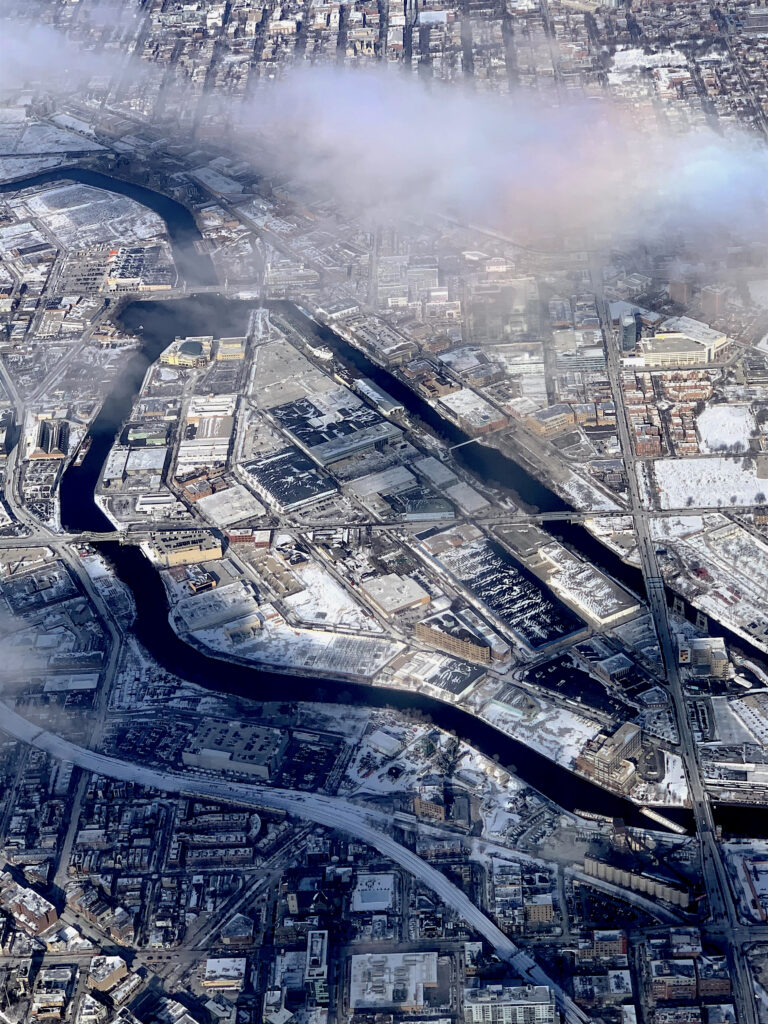
If you’re a beer drinker, you may know the brand Goose Island, one of the early local brewpubs that made it big when it was acquired by whatever multinational conglomerate also owns Budweiser, not that I’m implying anything about the quality of Goose Island. (I still like a couple of its beers.)
This is Goose Island, the namesake and location of the original brewpub. Until recently, it was, as you can see, a mostly industrial area, though lighter industry than the Calumet River. The north-south street is Halsted, the east-west street is Division, and way over on the left a little above Division, you can see the old Morton Salt plant, which is now the Salt Shed concert venue and entertainment complex. This is slated for intense gentrification and luxury development over the next decade. I keep taking pictures of industrial areas that become luxury developments somehow.
January 19, 2020. iPhone XS Max cell phone, 6mm focal length (35mm equivalent: 60mm), f/2.5, 1/1,065, ISO 16.
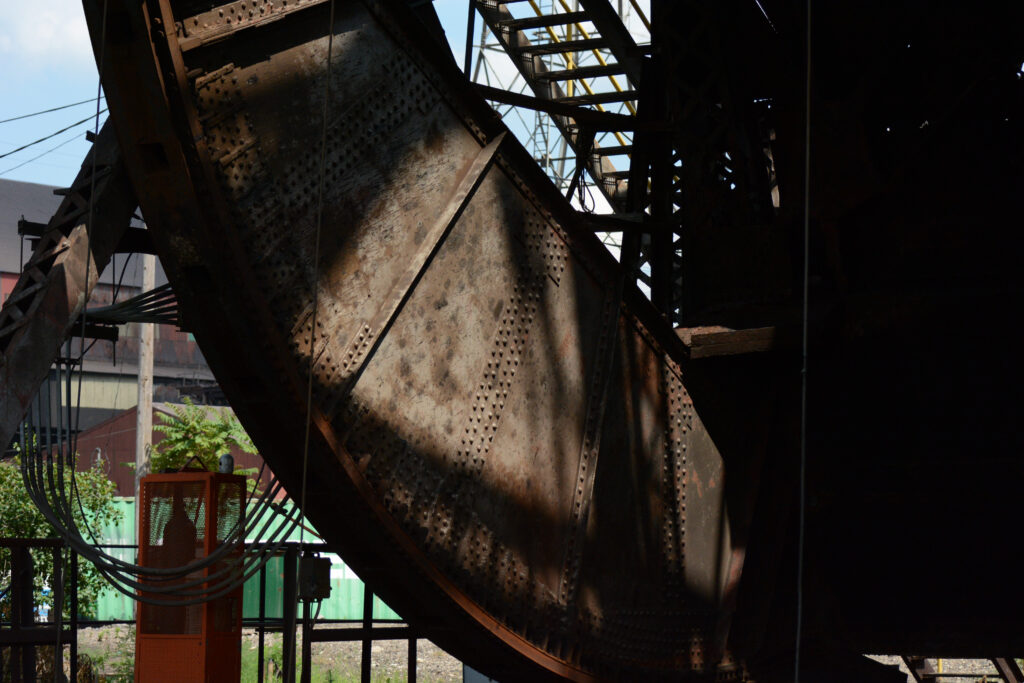
I have posted photos from some of the Forgotten Chicago tours of the industrial Calumet River area of the lift bridges that, when the track is down, span the river, but are kept well above the height that freighters need to maintain clearance and keep the river traffic moving.
It’s hard to reduce the scale of those bridges, which are immense, to a little photo on a little blog. On my last of those trips, I was happy to see this view of one of the wheels that actually moves all of that metal. Even these wheels — essentially the pulleys that move much of the mechanism — are staggeringly large. They have counterparts atop the structures and at some point, I’ll post one of those, which will lose the sense of scale we see here but show how it all fits together.
July 21, 2013. Nikon D7100 (DX sensor), Nikon 70–300mm lens at 70mm (35mm equivalent: 105mm), f/4.5, 1/8,000, ISO 1,250.
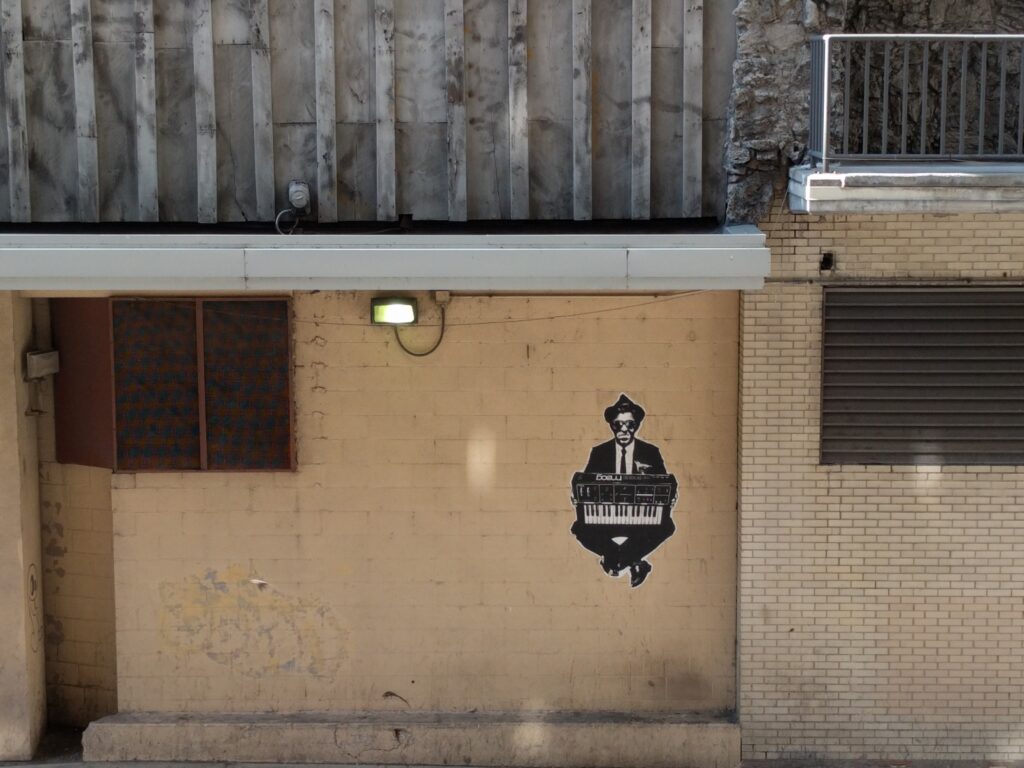
I don’t know, but it feels like this might have been created, or at least posted, by the same folks who did the illustration of Betty Boop on the laundromat wall that I posted some time ago. This was just off Chicago’s commercial Magnificent Mile strip, on a wall of a grimy area on E. Grand Ave., and was one of two things that made that area just a little better, the other being an upscale donut shop.
The image seems — this is a best guess but I’m comfortable with it – to be a portrait of a local musician and producer. The city of Chicago painted over it a couple of months later, just slapped a muddy brown rectangle of dark brown over it, because Chicago hates too many nice things.
May 24, 2016. Google Nexus 6P cell phone, focal length 4.67 (35mm equivalent: 26mm), f/2, 1/220, ISO 60.
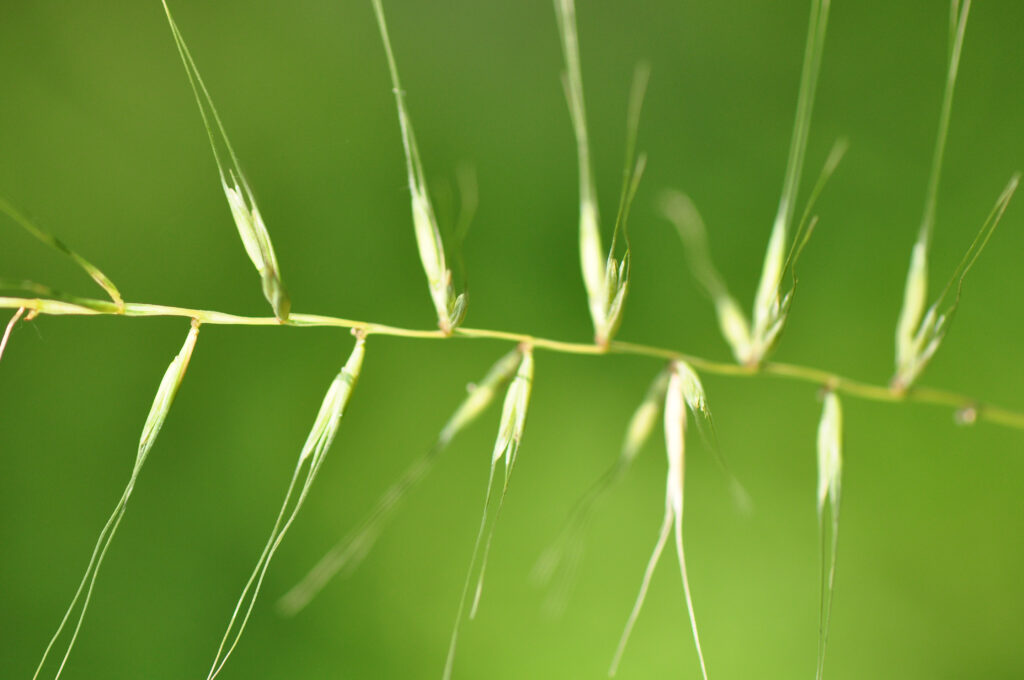
A counterpart to my experience shooting the thistles against the cardinal flowers that I posted not long ago, this was one of the first photos I took with the macro lens, designed for closeups. This stalk of grass in the nature preserve had gone to seed and I wondered whether I could take a good picture of it, isolating the green stalk against the green background, and using depth of field to isolate just a few moments of sharpness. It turned out that I could. I’ve always been really happy with this photo.
August 2, 2009. Nikon D90 (DX sensor), 105mm Nikon macro lens (35mm equivalent: 155mm), f/4, 1/640, ISO 400.
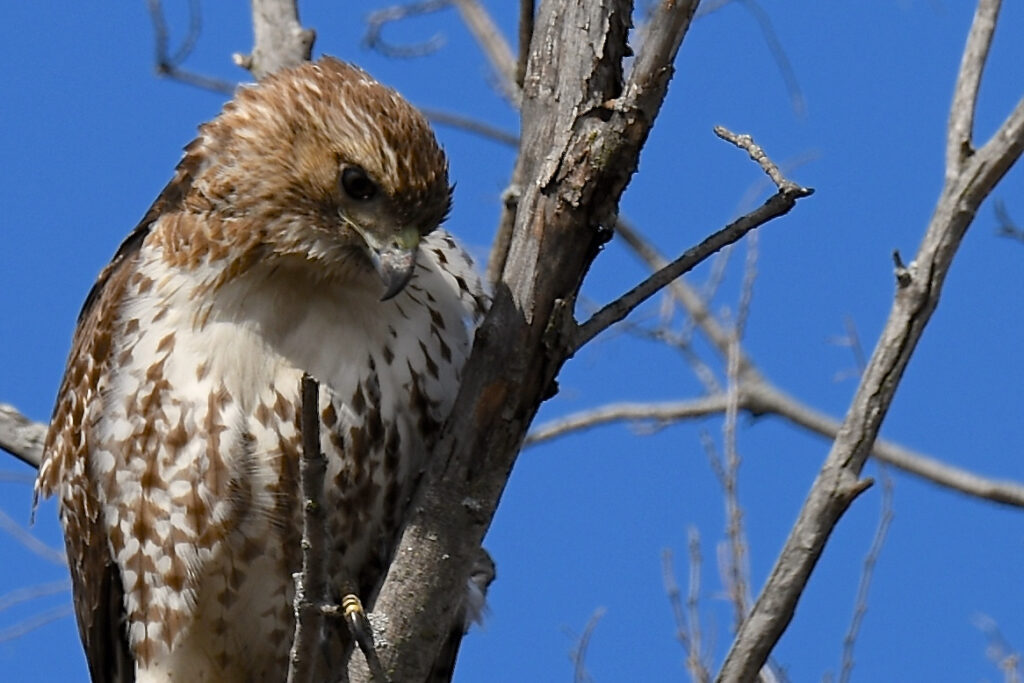
If you’ve been reading for a while, you may remember the Dorkasaur post, in which I caught a hawk kicking through scrub as if it had lost its keys. In that post, I noted that, as long as the raptor is above us — flying or perched — there is no doubt it is an apex predator.
Case in point — this is the same hawk, well before the moment it landed in the brush. It saw something, and hawks obviously can’t think the way people can, but it knew something was there and it was calculating how hard it would be to catch it and how worthwhile that effort would end up being.
That it studied very specific spots in this way was what made the Dorkasaur photo stand out to me. Clearly it heard and saw a lot going on around it, and yet it just jumped to the ground and started kicking around.
For my last few years of work, I’d turned my cubicles into galleries of my photography. I’m happy to say that this was always prominently placed and got a fair amount of attention from passersby.
April 9, 2022. Cropped from a larger image. Nikon D850 (FX sensor), Tamron 100–400mm at 400mm, f/9.5, 1/250, ISO 64.
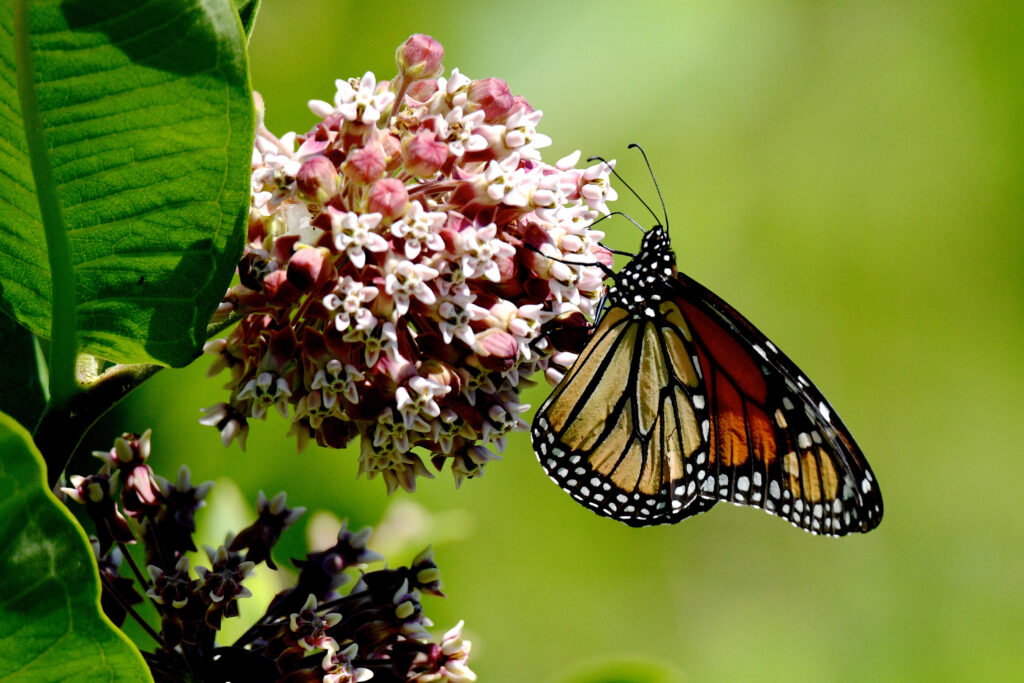
As I was reviewing photos, I came across this and I stopped. The same way I’ve mentioned sometimes I’m walking down the street and I see a moment and have to capture it — that happened here just looking at it, and it’s because of the textures; do whatever you can, whatever you must, to see this photo as large as you can see it.
The gorgeous roughness of the leaves anchored in the corners, the amazing folds and velvet of the monarch’s wings, and the pink and cream ball of milkweed flowers in between, with the soft blur of the lush summer green background, make this a photo I really love.
July 9, 2022. Nikon D850 (FX sensor), Tamron 100–400mm at 400mm, f/6.3, 1/2,000, ISO 800.
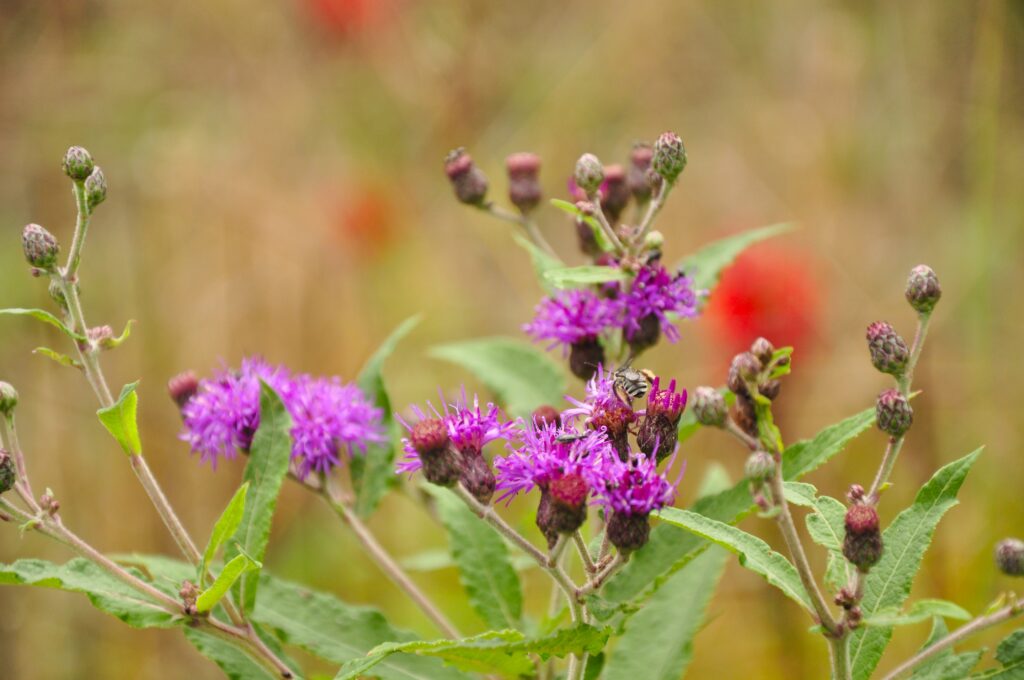
When I took this photo, I’d just set aside my old point-and-shoot and moved on to my very first DSLR, very much a beginner model; this was a couple of months in, and I was still learning about exposure. And my primary lens was the beginner-level model that came with the camera. But I started to take pictures like this, and felt like I was starting to get good enough to think this was a hobby I’d be able to explore. I love cardinal flowers, and the soft red blur in the background complements the thistles really nicely. Both the visuals and the nudge it gave me to continue with the hobby are pretty good reasons for me to love this photo.
August 22, 2009. Nikon D90 (DX sensor), Nikon DX 18–105mm lens at 105mm (35mm equivalent: 155mm), f/5.6, 1/800, ISO 400.
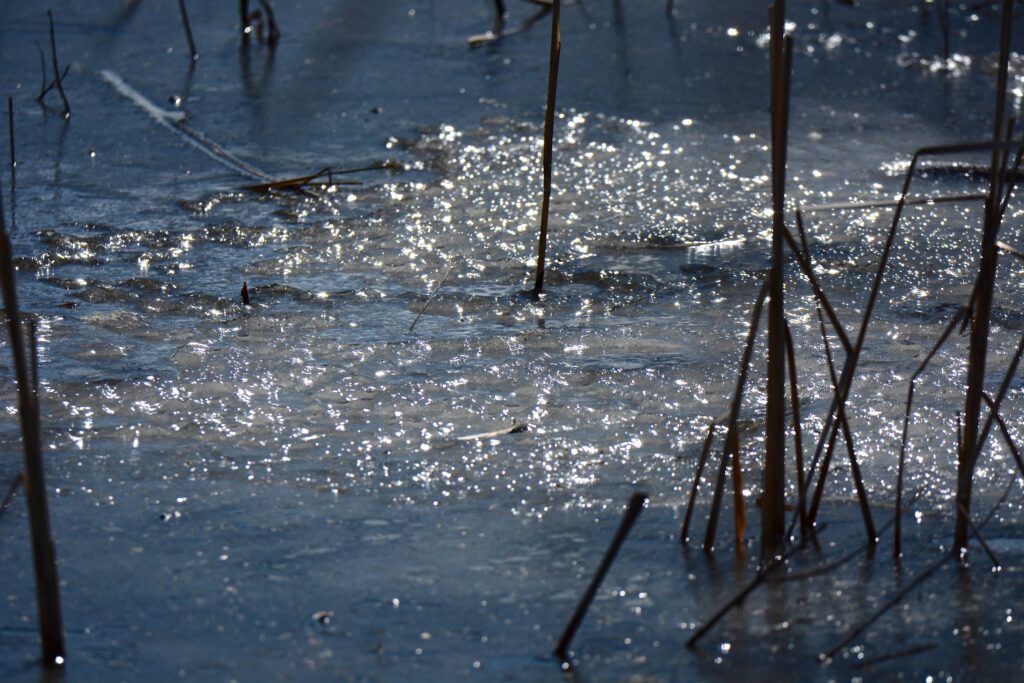
In mid-March in Chicago, there’s still plenty of ice. I loved how the sun caught the texture on the ice, especially around the reeds. It’s thin ice; there’s all water under that skin. But I do like a good texture, and the bubbles and the waves caught frozen create plenty of texture.
March 16, 2019. Nikon D7100 (DX sensor), Tamron 100–400mm lens at 270mm (35mm equivalent: 405mm), f/6, 1/4,000, ISO 280.
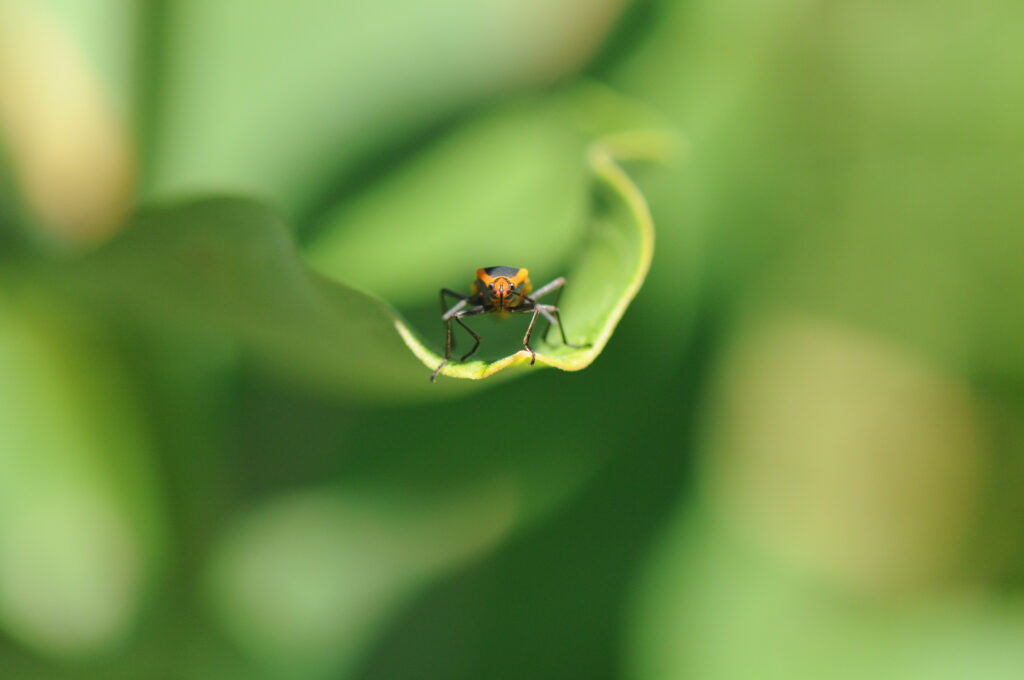
I like milkweed bugs a lot. They’re not much bigger than a grain of rice and tend to be found in swarms, drinking up the milky sap that gives the milkweed plant (and the bugs) the name. Plus, although there isn’t a lot of room for variety on their tiny backs, they’re decorated with patterns that could be little bug Rorschach tests. Also, considering how itty-bitty they are, they seem to have a smidgen of curiosity. This one marched to the end of a leaf to stare me down, and I’m happy to say that this photo is completely unedited.
And yeah, I got the picture, and I was really happy with the picture, so I moved on. Then I noticed that it was still perched at the end of the leaf, so I took another photo, but it doesn’t matter: It won.
July 25, 2010. Nikon D90 (DX sensor), 105mm Nikon macro lens (35mm equivalent: 155mm), f/5, 1/500, ISO 640.
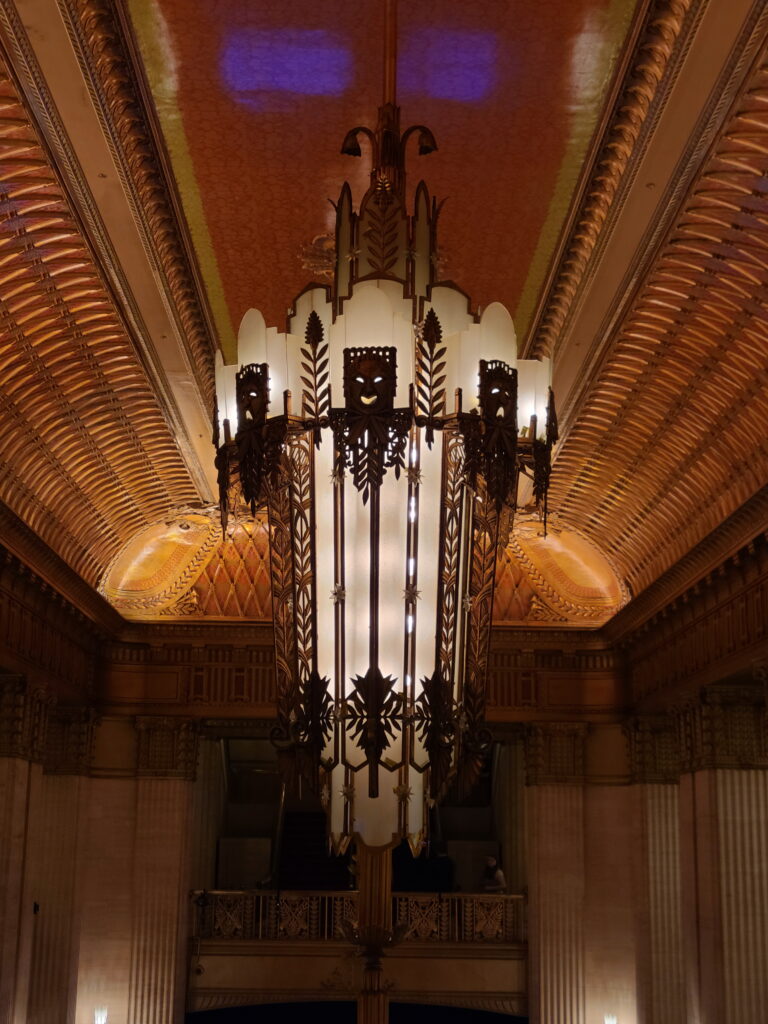
The Civic Opera Building in Chicago, designed by a whole lot of architects, is a mostly beautiful building (if you know, you know) dating back to 1929. Like any high-rise building in the Loop, most of the space is devoted to offices, but the Civic Opera House is home to the Lyric Opera of Chicago. The art deco interior is fabulous, worth going there to see it, and if you’re at the right landing to get a photo of the amazing chandeliers, you may end up with something like this, because they are that beautiful and wry. Yes, I said “wry.”
June 4, 2023. Samsung S24+ cell phone, 5.9mm focal length (35mm equivalent: 28mm), f/2, 1/60, ISO 160.
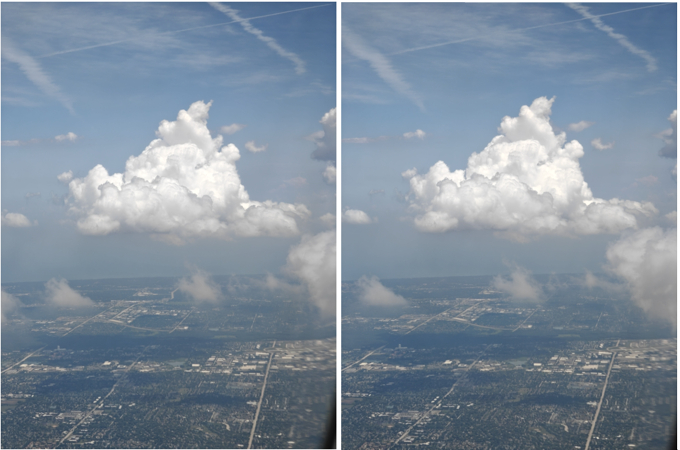
I have said this here only once before: Oh my frickin’ god do I love this photo. I guess that should technically be “these photos,” but I love them because they are, when you do that Magic Eye thing crossing your eyes just a little bit, 3D.
The layers of depth are remarkable. Those little puffs are right up front; that nice big fluffy cloud has its own sense of depth. The ground below recedes to the horizon perfectly. A few other clouds float here and there between us and those contrails in the distance. (The contrails and the cirrus clouds are too far away to show up in 3D.)
This is a pretty comfortable size for you to try it even on a laptop, and a phone works really well too. Phone screens are glossy, and you should try to avoid reflections. If it feels too big for you to nail it, you can push the screen away or hold it a little farther out. Use that big cloud in the middle as your eyes’ focal point and the rest will fall into place.
I’ve long been interested in 3D photography; every time I take my DSLR out, the first two photos I take are handheld 3D shots, moving the camera a few inches to the right for the second shot. They’re partly test shots to make sure I haven’t forgotten to adjust any settings, but they’re also a chance to indulge my love for 3D photography. Once I step into the nature preserve, I’m reacting to what’s going on around me, and chances are pretty good that whatever bit of nature I’m photographing, it won’t give me the time to take two photographs to get the effect properly. Noticing, as I was saving a bunch of recent photos into my gallery app, that my timing on these gave me some real possibilities — that got me excited, and I’ll confess that when I saw the small clouds in this pair of photos leap out at me and the others recede, I shouted “Oh!”
June 29, 2025. OnePlus 12 cell phone, 13.3mm focal length (35mm equivalent: 70mm), f/2.6, 1/540, ISO 50.
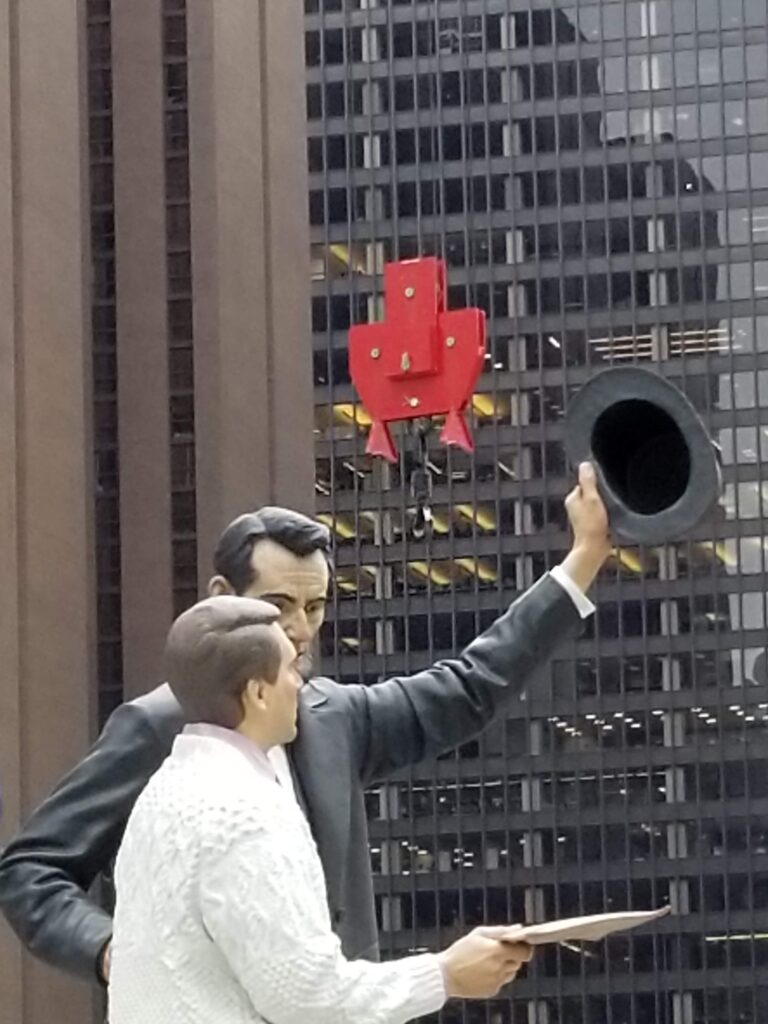
Here’s another scene that stopped me in my tracks. For some years, the large plaza across the street from the office building I worked in had a series of advertising statues. They were dumb and garish and tacky.
That plaza is adjacent to Chicago’s Riverwalk, where some construction was taking place. A lot of cranes have counterweights that are just big, heavy squares, but whoever designed the cranes being used at the construction site… maybe they really were a videogame fan, maybe they were going for a unique look, maybe they were just eccentric.
Anyway, there’s a guy with a sweater listening to Lincoln as he gestures with his hat toward the alien descending from the heavens; there is no other story this photo could tell, and the title explains why I love this photo.
May 19, 2017. Samsung Galaxy S8+ cell phone, focal length 4.25mm (35mm equivalent: 26mm), f/1.7, 1/230, ISO 50.